Sep 19, 2011

Eat That Book

On the eve of the Cambridge conference entitled "Eating Words: Text, Image, Food", a few hardy forks assembled at our warehouse to conduct Plurabelle Edible Book 1. Designed as an improvised mixture between a seminar and a performance, the event attracted about a dozen attendees who spoke about their secret "book to mouth" desires, admitted to past bibliophagic engagements, ate a book, and watched others eating one. The typographic appetizers proved popular, Roasted Bookwheat was perhaps a bit dry, and the Bookbay Mix a bit too salty, said some. The books, however, were just right.

Plurabelle has been on the forefront of bibliophagy for a long time. As a cook may combine nutmeg and tomato sauce, balsamico and double cream, asparagus and strawberries, so we invite our website visitors to browse ourstock by freely combining subject terms on our kitchen page. We have issued "Eat more books" stickers, we have a whole gallery of how to prepare a book for consumption. We also look after our little pet crocodile in one of our shelves which says the same:


In short, the combination of our interest in the culinary enjoyment of books, and the conference entitled "Eating Words: Text, Image, Food" produced a perfect opportunity. This was the moment to leave behind the level of metaphorical signification and to get down to it. We started with Bookwheat (gluten free, of course)...
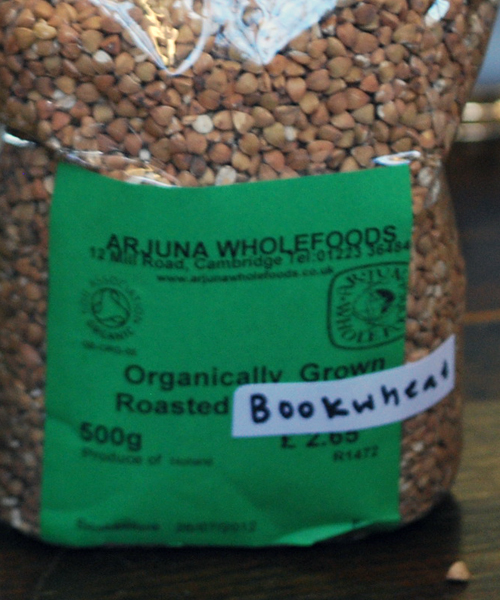
Bookwheat


and so to printed matter pure and simple


what a meal!


yummy, that was good


nice!


But what does this all mean? For a long time, literary critics subscribed to the notion (aka hermeneutic ideology) of the unlimited reach of understanding, emblematically depicted in the nail-eating ostrich.
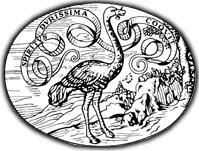

The ostrich consumes a nail to show the ability of the understanding  (spiritus) to
conquer even the most difficult material (Einaudi)

Just as the ostrich can digest nails, so the scholar of writing can make sense of the strangest book. Interpretation would never reach a limit. Perhaps Plurabelle Edible Book 1 is a parody of this founding metaphor of the discipline which continues to give us steady supply of English Majors (including this very bookseller), engaging the limits of understanding in a less then interpretative manner. Are we enacting a love-hate relationship with books, which a analyst would interpret for us, or was the event last week a way to glimpse over the walls of the interpretative attitude, into the promised land of "Stop Making Sense"?

For this reason, the true hero of the evening was the homovorous book, a highest level of the carnivorous plants
The Homovorous (man-eating) Book. Design, concept and artwork by Laura Nuttall (© 2011)

This philosophical object (Thanks Laura!) reminds us of the limits of the digestive paradigm of spiritus durissma coquit. Grammatically speaking, bibliophagy is transitive: If you devour a book, you soon enough find yourself consumed by the book. The reciprocal nature of subject and object in the process of engaging with writing offers plenty of .. food for thought. 

Jul 27, 2011

Adriana Sorts it Out

Adriana came to Cambridge to improve her English. Her English is actually very good, it just suffers from the famous final "e" which Italian speakers love to attach to an English-e word-e. A dog is a dogge, a book is a booke, and even my bike would become a bike-e. Somehow the bookseller sensed an opportunity to hide (nascondere) his own errors in Italian, and generally take advantage of a very pleasant presence.

It so happens that some books needed to be re-shelved, shelves needed to be re-sized, dusted, moments of organisational doubt were on the horizon. Books needed to be looked at, queried if they won't ever leave the premises and pay their rent. This kind of work is best done in two. One sits on the computer screen, the other stands at the shelf, and so we tried to improve the pronunciation of our Italian guest by making her shout out titles across the warehouse.

And in between, photos were taken.


Thanks, Adriana. Call again! Did your job restoring artworks work out?


Jul 23, 2011

Cambridge Librarians at Plurabelle


Cambridge Librarians meet at Plurabelle for their annual summer party. The Cambridge Library Group is an active association of Cambridge librarians with a membership of more than 80(?). It was not one of those perfect college lawns, there were no porters, and no dons to be seen, but the trains were passing in the background.


Darren brought two right hands to get those big tables out of the warehouse, the delightful summer rain, which never fails to attend this event, was promptly seen (well, just a bit).


Those big conference table (each seats 24) were wheeled out on the lawn, filled with food and drink, and the book professionals took a good look at how we would try to recycle their unwanted stock. Who would want to spoil the fun and talk about cataloguing rules or how to identify first names? 


Saxology brought five saxophonists (nice!), Ruth provided excellent Plurabelle fare (thanks!), Jillian did the local co-ordination, and at the end someone was seen disappearing on a unicycle.  Amor librorum nos unit!


Mar 19, 2011

Selling More Books to Turkey

Geçmişten Günümüze Posta Kitabında kullanılan fotoğraflar
Thanks to everybody who is helping to make our little campaign into a success. Yes, Plurabelle wants to sell more books to Turkey. Why?  How comes that this English bookshop with a German accent, where the manager answers to a Palestinian name, should discover Turkey? Why selling books to Turkey? - Yes, it just seems strange to some of our friends.

Well, times are difficult! We are already selling books to the obvious places, now we want to sell books to the places which are a bit less obvious. We are looking for new markets. A language we do not speak is just the right challenge. Book export is a good thing, it is not like selling weapons or drugs, - it is just about selling books. Books do good things, where-ever they go. Or perhaps we are just trying to do the less obvious, seeking the path less trodden?

So please, put away this suspicious glance, and just have a look at our shelves full of books. And in no time, a trickle of books will turn into a small rivulet. Our site lists just 15 books with the word "Turkey" in the title, three with the word "Türkei", but a few more with "Turkish" or "Turquie". Add to this ten titles published in Istanbul, a dozen published in Ankara, and another dozen written in the Turkish language - still not really enough to build a campaign to sell more books to Turkey. But we have more: We have over 50.000 titles, all exquisite quality, most written in English, some with traces from the famous Cambridge libraries, and that could well be of interest for your academic readers anywhere, also in Turkey.

Mar 10, 2011

Jo de Lyon / vicit Leo de tribu / Juda


Now here is a nifty little book for which we are which we are looking for a new home. Published in 1510,   re-make of the small volumes which Aldus Manutius invented in Venice a few years previously, inscribed along the edges with a name and a motto of the first owner, and with a long and intriguing manuscript inscription to the title page which declares this book to be a present for his friend, Joanni poligrapho Anglico, in 1514. There are a lot of stories around this special copy of Plinius Historia Naturalis, and a lot of research that has already completed.  We have put all the information in one place, eleven chapters about a rare curiosity: Read all about it at http://jodelyon.blogspot.com/

Feb 19, 2011

Title Pages, Just Title Pages

Titles Pages are very special places in any book. Printers used them to advertise their goods (literally, they were displayed in the window), their design emphasizes the selling points on the product, and the book historian of today can use them to better understand the history of books, the book-trade of the past, and the development of  typography. Just think about the way in which a title page differs from a normal page of text, and imagine what a book would be like if it only contained title pages. 
Well, luck will have it that we find ourselves in the possession of a book (recte: a collection) of engraved title-pages from the from the 16th and 17th century. Early on these engravings were valued as prints, and were sold separately through the specialist trade of prints. We are now selling a few of these on ebay, in case you are interested in a Rubens item, the title page of a 1680 Hollandsche Mercurius, or the title of a Dutch book on legal language which is entitled Parrot, or rather, Papegaey ofte Formulier-Boek, we would be happy to oblige. (more to come)


Quintilian, Oratoriarum Institutionum, Cologne: Cervicornus 1527 

Here is a title-page for a famous rhetorical handbook by Quintilian. This edition was published in Cologne in 1527. It features Cleopatra holding two snakes to her breasts, just as Shakespeare described it, an American Indian (?) with the name tag "Dionysius", and another guy, chained (literally) by the force of words that the art of rhetoric controls. But the curious and sweet thing is how type size is employed purely graphically here, without a semantic emphasis. Big letters for the first words, never mind that they only refer to the first name of the author. 

Feb 3, 2011

Boekenhal: A Visitor's Report

This is the report from a Dutch visitor who came to our warehouse a few weeks ago on a dark and rainy night. The post has been published in Dutch on the site for a Poetry Magazine, and we are here offering a rough translation and  the beautiful photos. Thanks, Joep, call again soon!  

Joep Eijkens: Plurabelle Books, a book-hall in Cambridge

Plurabelle by Night

A Circular Revolving Door Frame.

Books, More Books and Boxes

View from the stairs leading to the office space

Packing Area: Here your books are being carefully packed and prepared for shipment


...a Bicycle!

"It's cold today"

Anna Livia Plurabelle

"Anyone who say they have only one life to live must not know how to read a book"

One of the best ways into a new city is the antiquarian itinerary. It may not work in all cities, but when it comes to larger towns, it is certainly worth a try. Even if you do not find good books, you will get to see parts of the city which otherwise would have remained invisible, and often it leads you to the more interesting locations.
Once I spent three days in Berlin going from one bookcase to the next along the secondhand book route.
Cambridge is not blessed in that respect, as I noted recently during a brief visit to the famous English university town. Fortunately, we found a local source, and someone pointed us - father and son - to an enormous hall full of books somewhere on an industrial estate behind the railway station.
And so we walked into the evening rain, directing our steps out of town, turn right, past the sports center, this does not look right, but suddenly a large building in front of us, clearly lettered Plurabelle Books. 
Fortunately, the inside was brightly illuminated, the door was open, and suddenly we found ourselves in a large hall full of books. No less. Nobody in sight. What immediately struck me was the area which seemed designed as a small antique store.
We were already looking around for a while when we heard some noise coming from the office space above. Someone came down a staircase, a woman. She introduced herself as Laura and explained that all this was the fault of a person who currently lives in California. And that she and a few others ran the ship in his absence. Yes, we were welcome to look at the books on the wooden shelves, in the antique area, but the internet stock was not shelved for browsing, - "for that you have to use the website."
Ignoring her advice, I took a stroll along the hundreds of meters of  shelves filled in the most disorderly manner with catalogued stock. Almost exclusively scientific literature. Medical reference books full of nasty diseases, books on philosophy, language studies, sociological theses.
Eventually I found a nice book on the wooden shelves set up for visitors: "Portrait of New York" by Cecil Beaton, one of the most famous British photographers of the twentieth century. "One pound," said Laura. You cannot beat these prices. Moments later my eyes fall on a showcase in which - well placed  between Leukoplast cans and a box of syringes - I spot the  booklet that gave the name to this remarkable book-hall. It reads: "Anna Livia Plurabelle" by James Joyce ("only one shilling"). Moving closer, I was able to read a little label displayed in the same case:
Anyone who says they have only one life to live 
must not know how to read a book

This is the deep and natural beauty of books, that they allow us to lead more than one life, and to engage in the experience of others, and learn from their lives and their thoughts by comparing it with ours.